Cross Stitch Materials List

You really don’t require many supplies to begin cross stitching. If you already embroider, you will probably only need to pick up the correct fabric from a local craft store, or even Amazon. Here is my list of needs and wants when it comes to starting cross stitch:

  • Aida fabric in the count called for on the pattern. The count tells you how many stitches will be in each inch in your finished project. If you want to make a project a different size, you can use a cross stitch calculator like this one from Yarn Tree to decide what count of fabric to use or how big your final piece will be.
  • Embroidery thread or floss. The easiest to find is DMC cotton thread, which comes in 6-strand skeins. You can find many different ways to store your floss, from keeping it in the skein to wrapping it on plastic bobbins or even making your own bobbins from scrap cardboard you may have laying around.
  • Embroidery needle. These needles will typically have a slightly larger eye and sharp point, but you can also find ones with duller points since you will be going through the holes in the weave of the fabric.
  • Scissors. Really, you can use any scissors you have around the house for cutting your threads, but you may find it easier to cut, especially when using fewer than six strands, with small embroidery scissors. Overall, your best bet is with sharp scissors, because dull ones will take more effort and leave behind more fraying, making it difficult to thread your needle.
  • Marking pen. I tend to use a water-erasable fabric pen, but other people use Frixion pens which are heat-erasable.
  • Optional: Embroidery hoop or Q-snap frame. It makes it much easier to get consistent stitches when your fabric is held taught in a hoop or frame, but these aren’t actually necessary. It is entirely possible, especially when working with a stiff fabric like Aida, to hold the fabric in your hand and stitch it. Sometimes, if you are working with a smaller piece of fabric, it can even be easier to skip the hoop for stitching and use it solely for displaying the finished piece.
  • Optional: Project bag. Whether a repurposed grocery bag, a special fabric pouch, or even a dedicated basket, it can be helpful to have a specific place to keep all your cross stitch supplies related to your project. If you plan on working on more than one project at a time, it is especially helpful to keep each project’s supplies together in one place.
  • Optional: Needle Minder. A needle minder is a set of two strong magnets, often with a cute picture on the top piece, that you sandwich your fabric in so you have a place to set the needle when you aren’t working on your piece. I tend to stick my needles to the magnets on the edge of my laptop or iPad case while getting more thread and stick the needle in the fabric when I/m not working on it at all, but many people find it helpful to have a needle minder.
  • Optional: Hoop or frame stand. These are helpful when doing long projects, but can also be helpful on quick projects. They come in floor and chair models, and hold your hoop to either free up both hands for stitching or just to not cause pain in the hand you would normally use for holding the hoop. Again, not a necessary item, but definitely can be helpful in the long run.
Sweater Weather

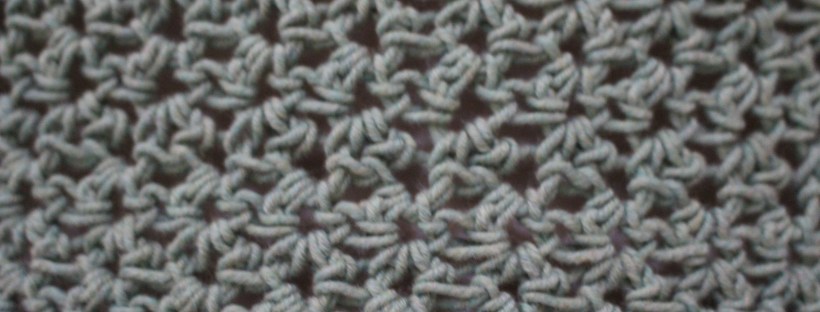
Well, okay, it’s not the same as sweater weather anywhere else. Which is why my new sweater is an open-weave crocheted sweater made in a sport weight cotton yarn.

A woman wears a green crocheted sweater and blue camouflage leggings standing in front of a green and white wave painting on a white wall.

The pattern is The Betty Boyfriend Sweater by Natalia McHayle (@taliacrochetcreations on Instagram) and the yarn is Cotton Pure in Linden Green from Purl Soho.

Back view of a woman wearing a green crocheted sweater and blue camouflage leggings standing in front of a green and white wave painting on a white wall.

The pattern is super easy and quick to work up. I finished it within four days, including sewing seams and adding the ribbing. Somewhere along the sleeves I accidentally added 10 rounds, which worked out nicely because I like my sleeves to end either above my wrist or in the middle of my hand.

Close up of the side seam detail of a green crochet sweater near the bottom edge ribbing.

The sweater is made in two flat panels that are then seamed up the sides and at the shoulders. You add the sleeves working back and forth in the round, which I totally missed the first time through. It’s not only written in the notes, but the joins are written in the instructions, too. I just happened to miss it both places until I was at the end of the first sleeve and realized there was no instruction telling me to seam it. I have a habit of messing up the first time through on a sleeve, though. Really would like to break that habit, honestly.

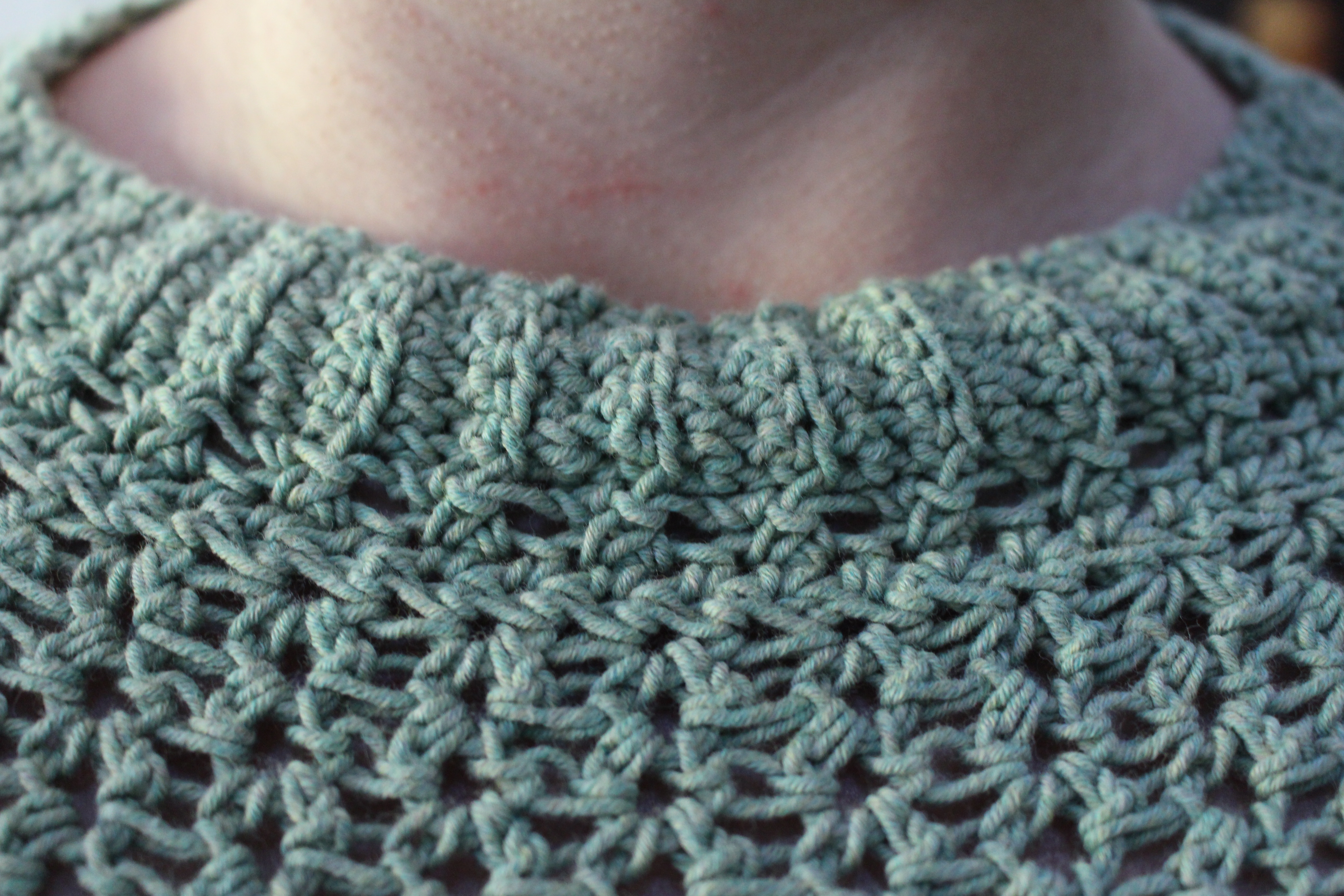
Close up of the neck ribbing detail of a green crocheted sweater

You add the ribbing on the sleeves, neckline, and bottom edge perpendicular to the edge and seam it when you get back to the beginning.

Close up of the shoulder seam detail on a green crocheted sweater.

The yarn is a dream to work with, too. I had a full ball left and ended up making a bag and a belt from it. My hands don’t really get fatigued when working with cotton yarns like some people do, but this one is very soft and shouldn’t give you too much problem if yours do. It’s even machine washable. These pictures are straight out of the dryer. It is so nice against the skin when wearing the sweater, too. I couldn’t wait to wear it today to take these pictures, and am planning to actually wear it again tomorrow. More detail available on my Ravelry project page.


Fabulous Fraternal Felici Socks – Pattern Release

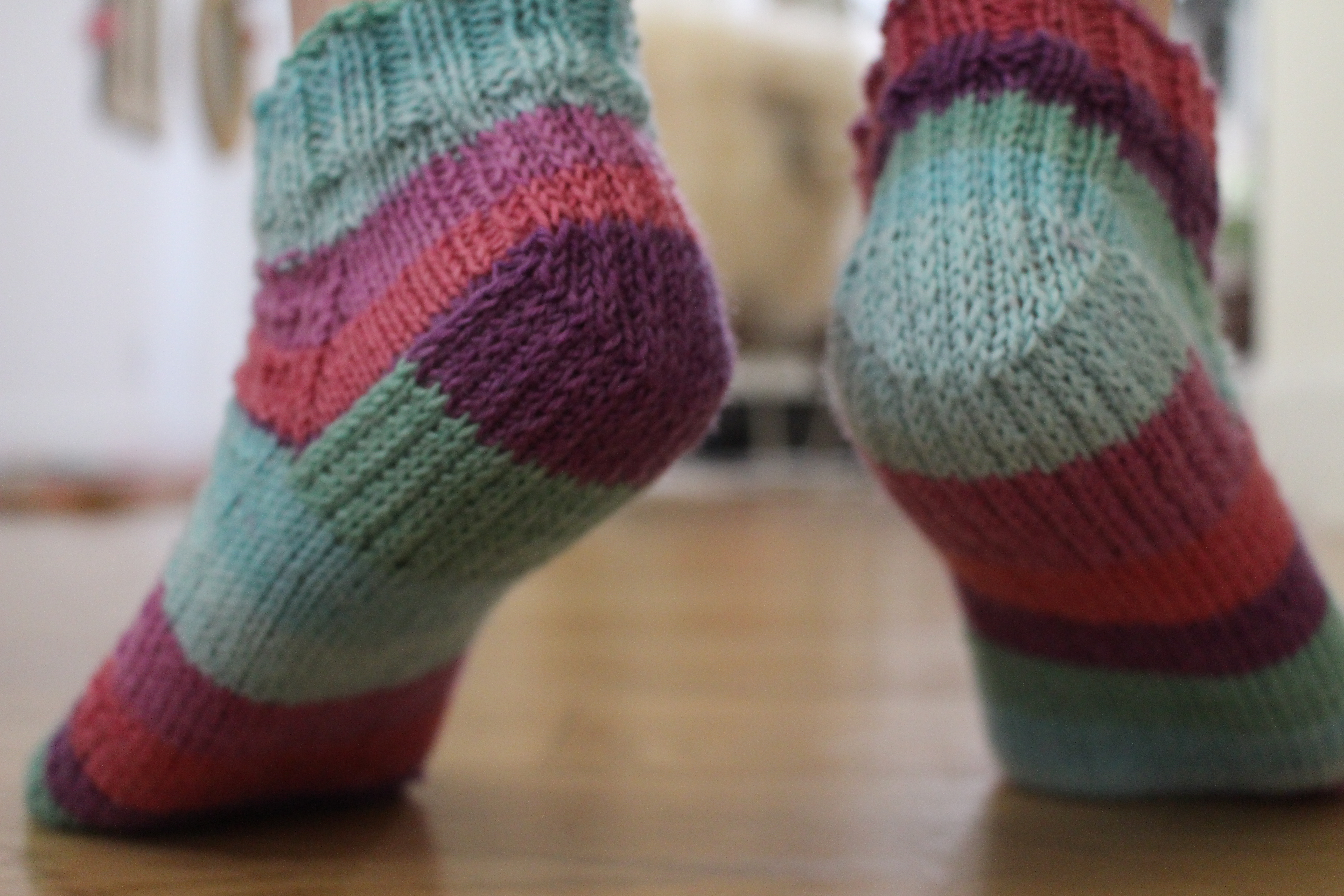
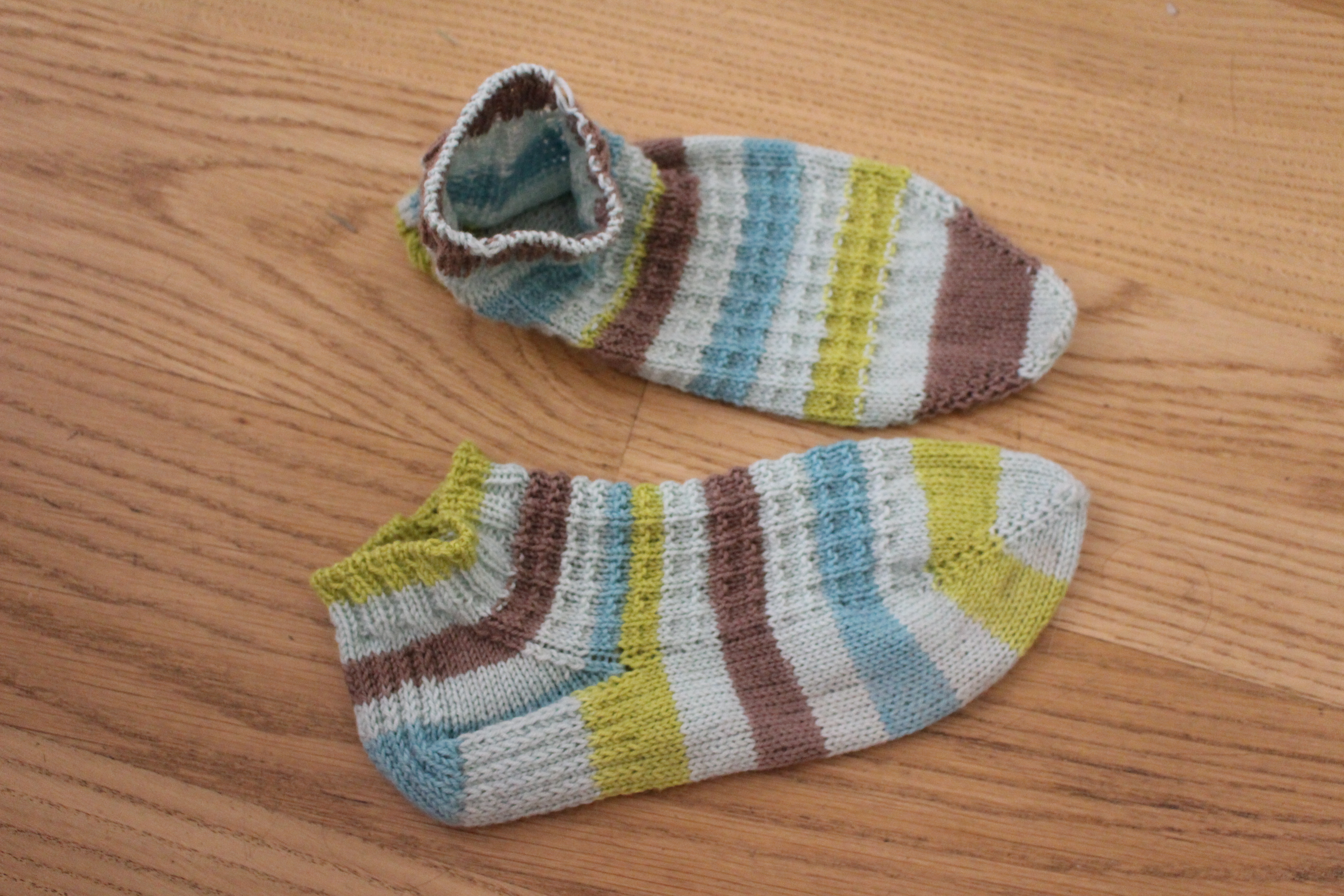
After a comedy show’s worth of technical errors, I present my newest knitting pattern and two new finished objects: Fabulous Fraternal Stripe Socks.

I started the purple pair in November 2020, but had to put it down for a while in a vain attempt to get holiday presents made. I got two holiday presents made, and one is still being worked on, so after I finally gave up on those for the holidays I went back to the socks.

Once I finished them, I knew I wanted to create a pattern out of them. I wrote it up and ordered a second ball of Felici through Amazon, which happened to be the only ball of it they had available to order, so I could go through and make sure I got every step written down.

I love a good fraternal pair of socks, and this pattern means you can get a full pair of ankle socks from one ball of yarn. I work them two at a time, toe up, magic loop style, but the pattern can also be worked one at a time.

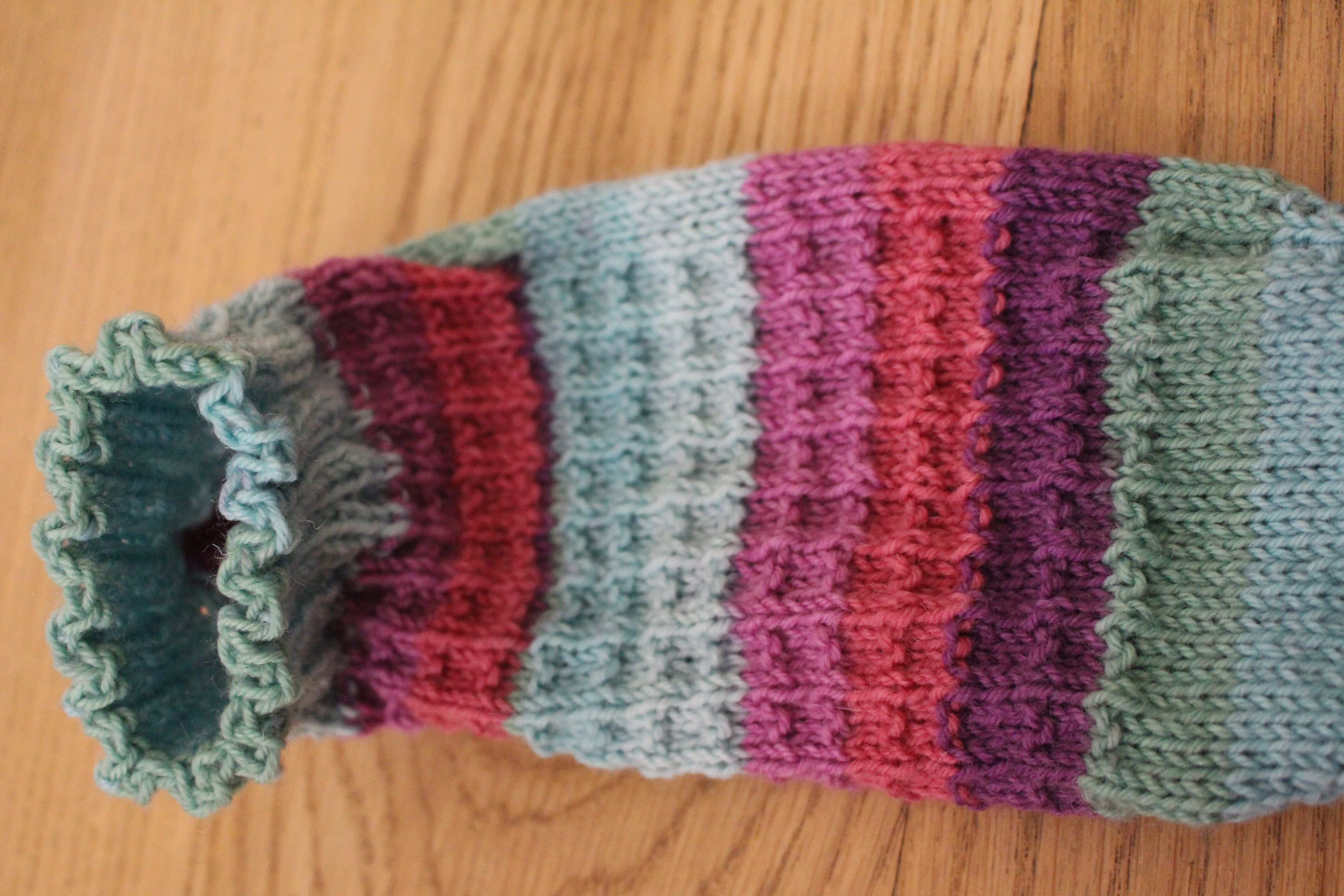
The purple pair uses my trusty go-to of Jeny’s Surprisingly Stretchy Bind Off, but for the blue pair I used a Long Tail Tubular Bind Off for the first time. Probably going to stick to my regular bind off for socks, but perhaps on things I’m already doing in 1×1 rib I will go for the tubular bind off. Switching from 2×2 to 1×1 was a bit fussy and not as fast.

I used a bit of a waffle pattern for the top of the sock, which looks really cool in the stripes, and my favorite heel flap and gusset construction for the heel with the slip stitch pattern carried up into the gusset for extra reinforcement.

Now for the pattern information:

These ankle socks are perfect for when you really want a certain color way of Knit Picks Felici yarn, but only manage to snag a single ball. They are meant to not match exactly, so you don’t have to worry about finding the color repeats.

Worked toe-up, this pattern is also perfect for personalizing to your exact size. Just try it on as you go! Instructions for tweaking the pattern to fit your foot length are given in the instep section. Just be warned that you might not be able to go much longer than the original pattern without adding in a second ball of yarn because there is very little left over at the end.

This pattern is written specifically for Knit Picks Felici yarn, but can be made in any fingering weight yarn with which you can achieve 7 stitches and 9 rows rows per inch. It requires a knowledge of both knit and purl stitches, and experience with knitting in the round is recommended.

If you use Ravelry (or even if you don’t and want to buy it there), you can get it here: buy now

You can also get it from my Ko-fi shop.