DIY Friday: Arm Knitting?

Okay, before I get into my real topic for this post, I just have to share this Lucy Neatby provisional cast on video. I was listening to old (2009) episodes of the KnitPicks Podcast where someone suggested this video, so I went to check it out. I seriously don’t know why it was so difficult before, but she explains it perfectly in this video. If you are confused as to how to provisionally cast on, watch it immediately. Or when you have a spare moment.

Now, on to today’s real topic: arm knitting. I’ve seen finger knitting before with yarn, but never one that uses your whole arm. I’m still not sure this is something I will be trying, but for those who want to try (or if you just want to see how this works) here is a good instruction video I found by Audra Kurtz of The Kurtz Corner. Here are her instructions for arm knitting:

Has anyone tried this before? Or even heard of it? Because “wandering” around YouTube was the first time I had ever seen it. I think. I may have seen it before and just forgot about. That does happen from time to time.
Sleep Deprived

Or, the laziest DIY Friday to date. Because a button sewing tutorial wasn’t lazy enough.

I have been awake pretty much since yesterday morning. Because my brain likes to sabotage my sleep when I have to be awake early. I got a bit of sleep, but only in 30 minute spurts. I know because I woke up and checked the clock about every half hour last night.

I’ve also been slightly busy this week working on computer things in the afternoon and so I didn’t make the thing I’ve been somewhat planning to make this week.

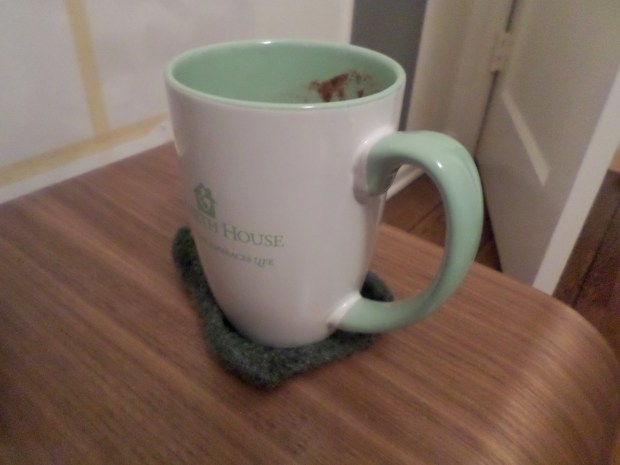
I did make a coaster yesterday, but technically it is a swatch for a secret project so I can’t tell much about it. I can say I made it using Wool of the Andes Superwash that I got from KnitPicks when they were offering a free ball to try a few months back. The colorway is Noble Heather.

Here is the DIY portion of today’s ramble:

Basic Coaster:
Materials:
Worsted weight yarn
Size 7 (4.5mm) knitting needles
Scissors
Yarn Needle
Instructions:
Cast on 24 stitches.
Knit 4 rows.
W(rong) S(ide) row: K2, P20, K2
R(ight) S(ide) row: K24
Continue alternating WS and RS rows until piece measures 3.5 inches, ending with a WS row.
Knit 3 rows.
Bind off.
Cut yarn, weave in ends.

Very simple, no? I’ve decided I need to make a couple coasters to have around my room since I have a coffee maker next to the end of my bed. It makes it easy when I have to get up 30 minutes earlier than normal after having slept exactly none the night before.

DIY Friday: Replacing Buttons

To some, it may be a simple concept to replace buttons on bedding or clothes when they break or fall off. Others will use the item until all buttons are gone, and still others will pass on an item when it’s lost even one button. This afternoon I replaced all 12 buttons (some broken, some still fine, and some completely non-existent) on the bottom of the duvet cover on my bed. I could have just replaced the four missing buttons and waited until the rest of the buttons fall off, but I decided it would be better to have all the buttons matching.

Because it’s how I spent my afternoon and I want to get a little more practice at writing tutorials like this, I’m going to show you my method for replacing buttons.

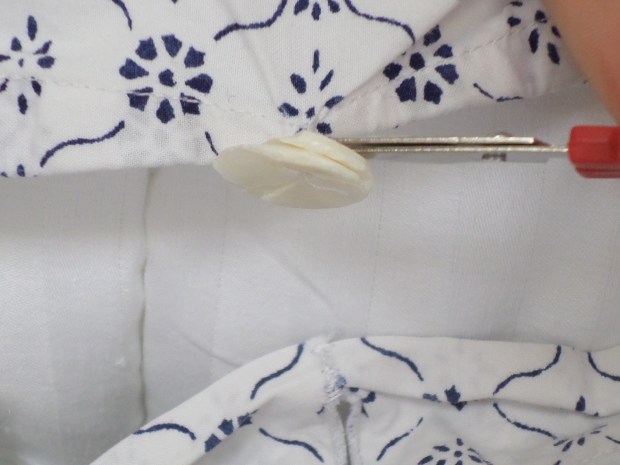
First, you have to remove the old, broken, button. Simplest way is just to cut the string right between the button and the fabric:

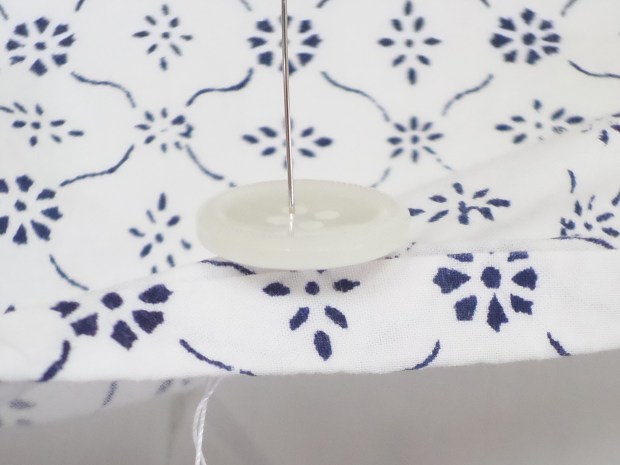
Next, thread a needle and tie a knot in the end of the thread. Then place the button where you want it to go and bring the needle up from behind through one hole of the button:

Go down through the diagonal hole, then back up and down through the remaining two holes in the same manner (If you only have two holes, just continue in a circle between the two holes):

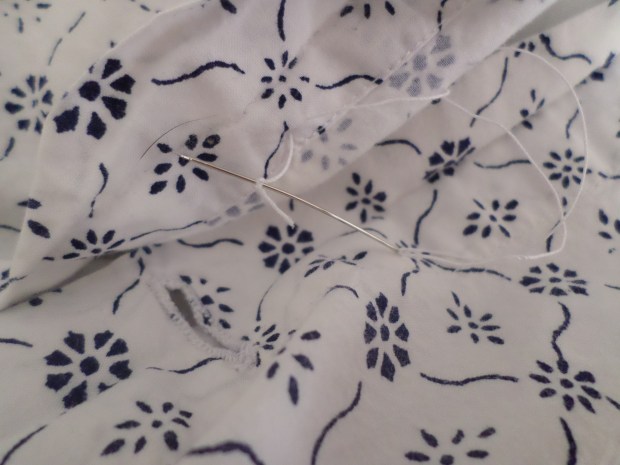
If the old button pulled through the fabric and left a hole, it may be helpful to put the needle back through the knot to secure the button the first time going to the back of the fabric:

Once you’ve gone through each of the holes three to four times, tie a knot at the back and you are finished.

Hopefully this is helpful. Let me know if anything is unclear. Also, what do you repair instead of giving or throwing away that others might just get rid of?

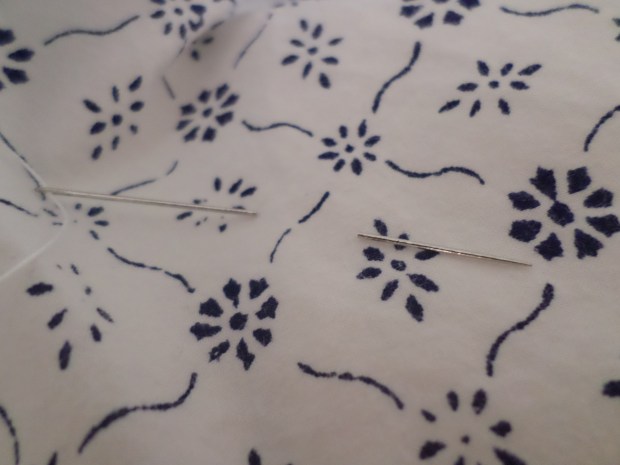
Bonus tip: Make sure you have fairly sturdy needles before sewing. It’s never a good thing to break a needle while you are hand sewing.

In fact, that was the first time I have ever broken a needle that wasn’t attached to a sewing machine.